photo: Marek Jančúch
DYCHOTÉKA
DYCHOTÉKA
(inspiration) Silvia Buranovská’s (Sviteková) original performative project follows the thematic trajectory of her previous individual and collective works, characterised by a distinctive degree of absurdity and open-endedness that continuously frames her artistic practice. In her work, she responds to the relevance of boundaries and tensions between high and low art, the urban and the rural, the isolated and the open, the conservative and the progressive. She fundamentally disrupts the conventions of the gallery space, introducing into it an almost physiognomic tempo-rhythm based on active breathing or, if you will, lighter genres. At the same time, Buranovská (Sviteková) naturally creates space for live interaction with the audience, although the work itself is not dependent on it. Brass-band music has never been this political. (expiration)
Slavo Sochor
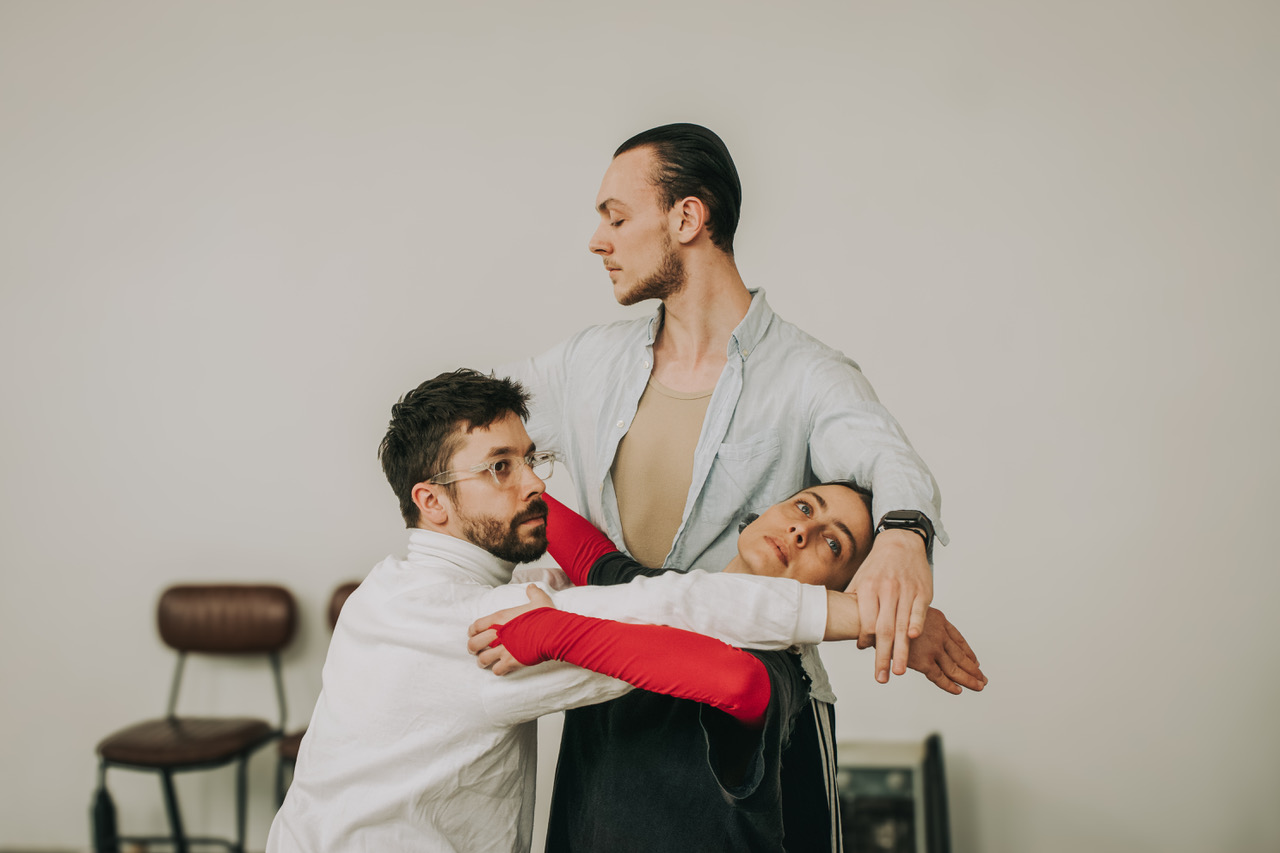
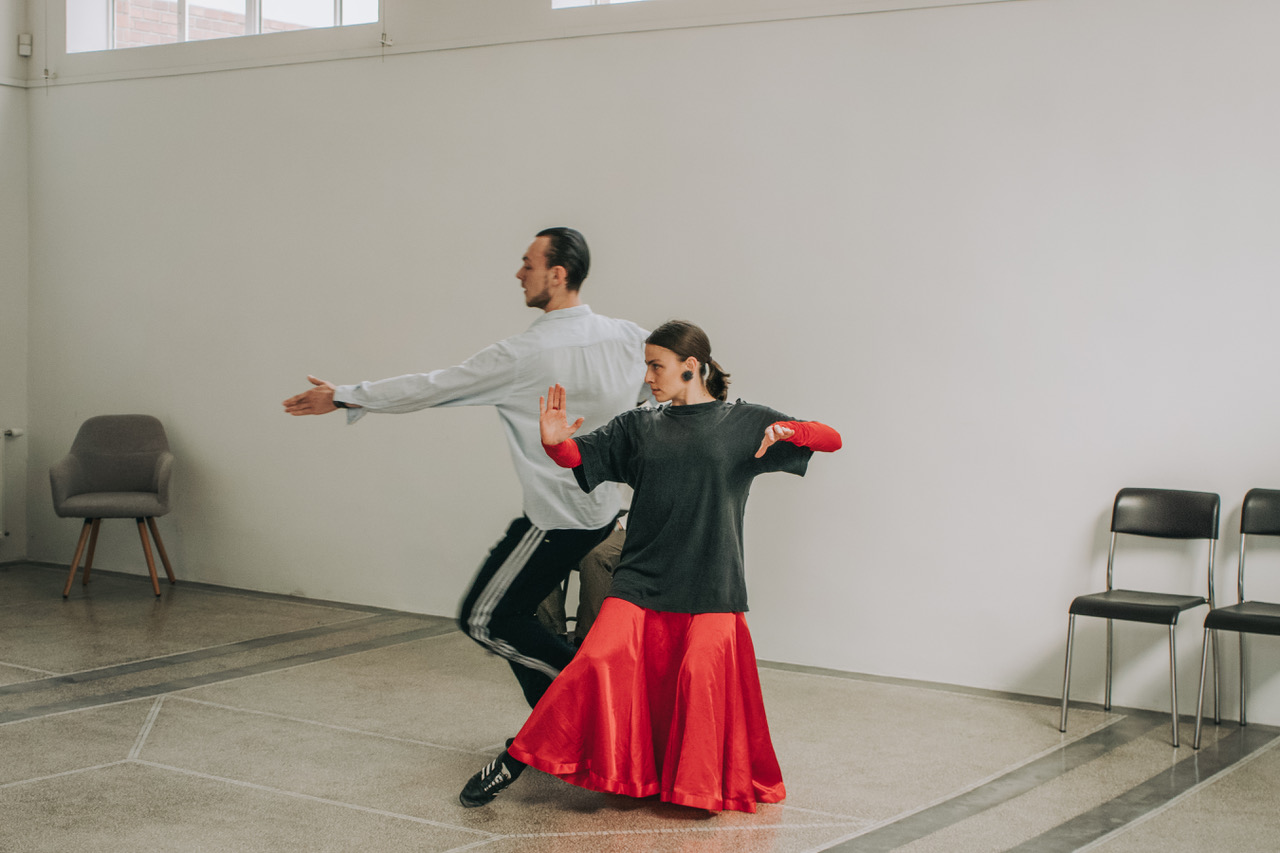
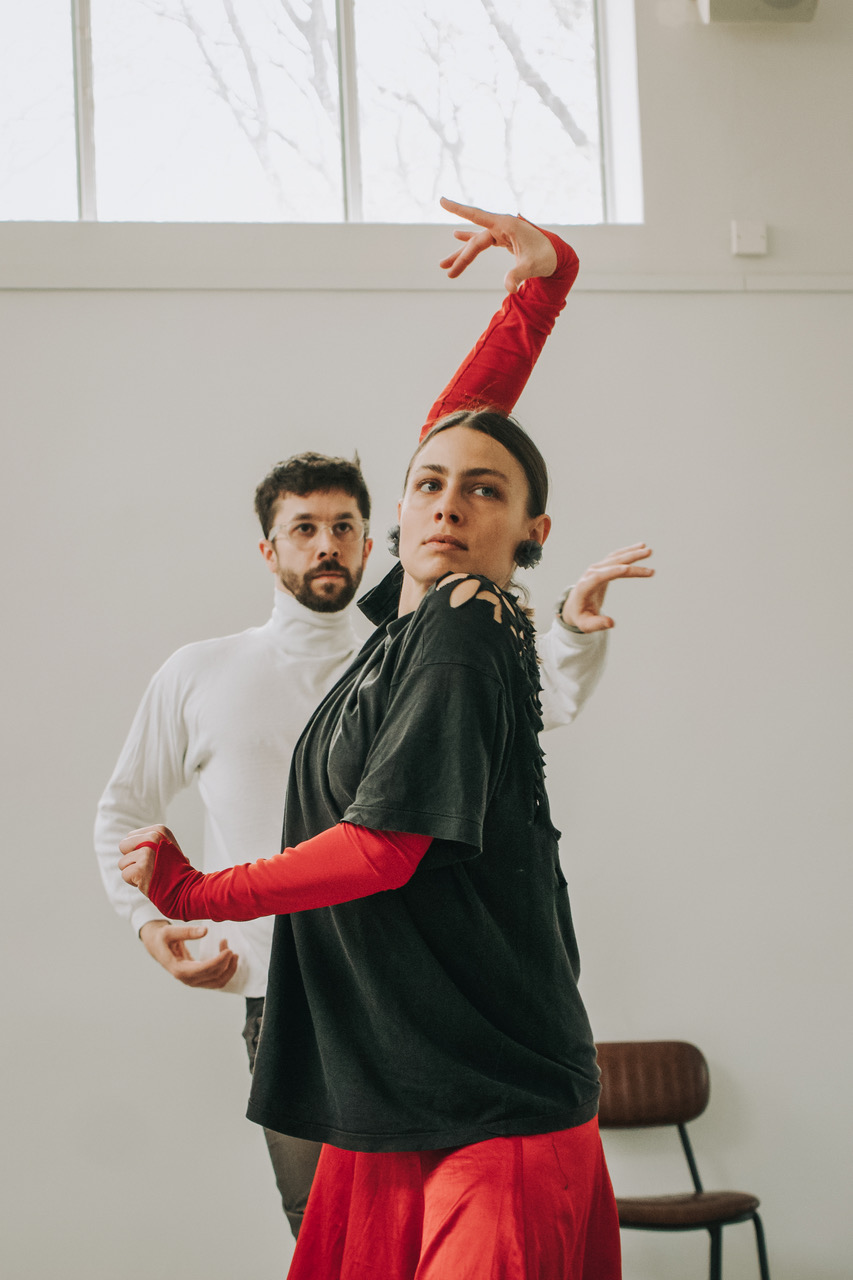
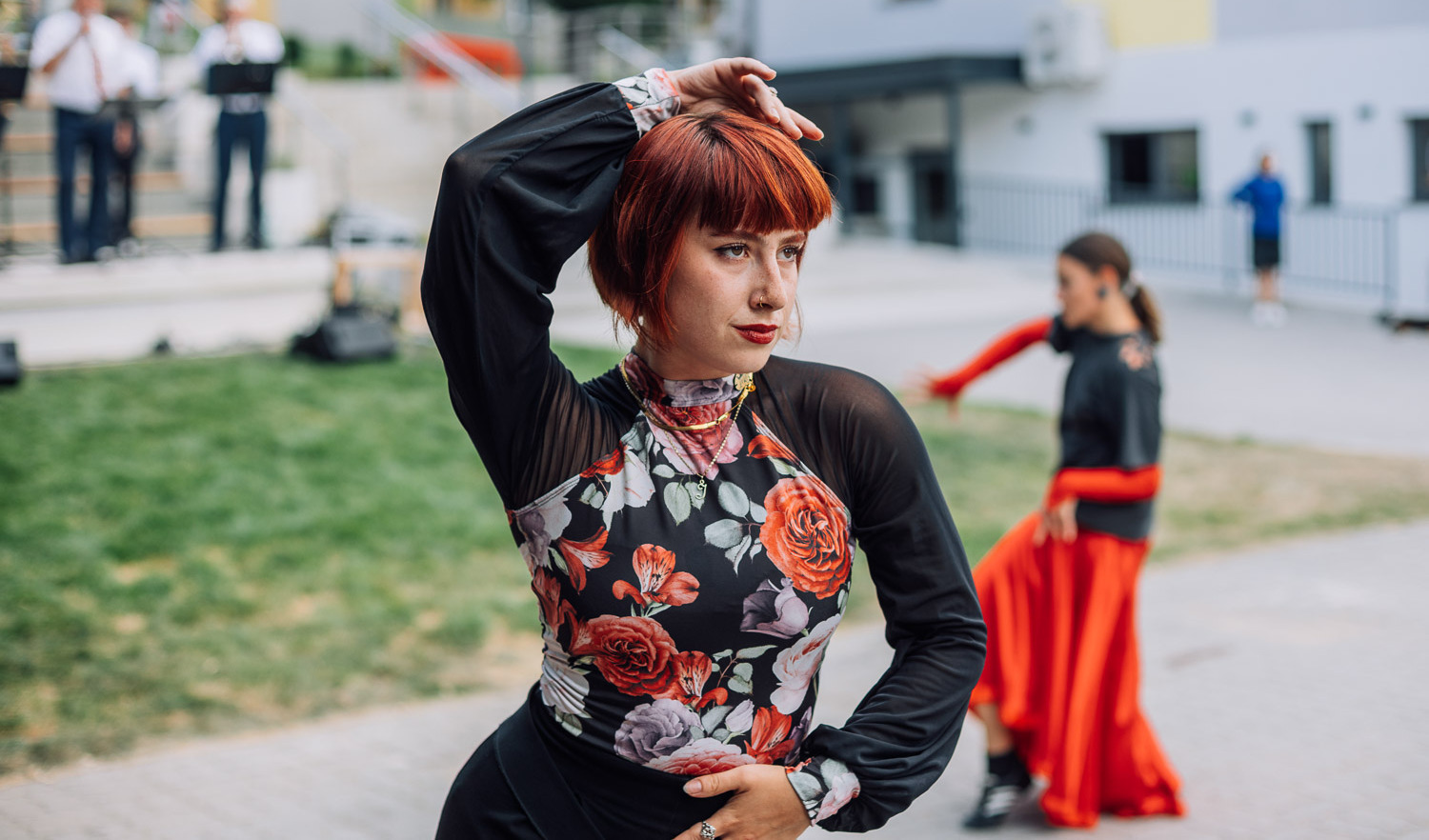
Ballroom dance has long been regarded as a cultivated form of social encounter. It creates space for eye contact, the touch of hands, physical closeness, synchronised steps and gestures. Alongside its energy and rules, it also reflects a stereotypical view of the male-female couple, while its hierarchical structure forms part of the rules of competition. When the couple is separated, the nature of the situation changes: it becomes a matter of individuality, tension, memory, discipline, training... How many meanings can a dancing body carry?
Brass-band music is inherently ambivalent: joyful and energetic on the one hand, nostalgic and poignant on the other. Within the performative installation, it functions as a teleportation device, or rather as an element that opens up space, creating another layer of the environment – the one “we know so well”. Brass-band music itself contains several layers of meaning. Its military and community-building character, for example, was appropriated by fascists, while today we tend to associate it primarily with rural celebrations. In the context of the performative installation, it becomes a kind of symbol of its time, an “eternal soundtrack of the present”.
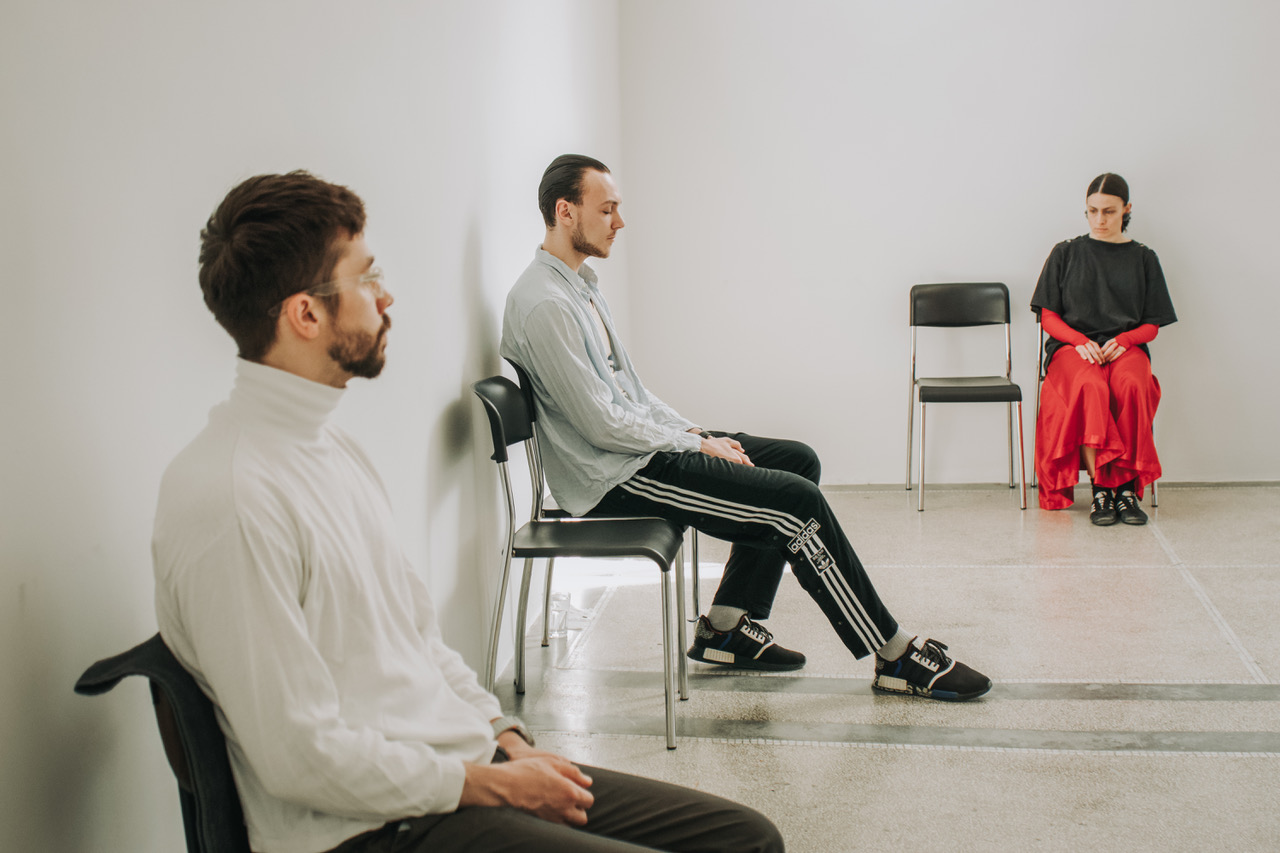
The work explores intersections and observes differences in the performativity of the body in contemporary art from the perspectives of visual art and dance. The performative installation Dychotéka is co-created through ballroom dance and brass-band music. This contrasting combination gives rise to a number of further oppositions. I am interested in how these different positions can communicate within a gallery or another type of space. In this durational performative installation, it is not only the dancers who become exhausted; the very concept of dance as a medium is itself gradually exhausted.
Concept and artistic direction: Silvia Buranovská (Sviteková)
Performance/co-creation: Katarína Čillíková, Dominik Dolník, Julia Pabst, Matúš Szeghö, Lukáš Zahy
Text: Slavo Sochor
Graphic design: Matúš Szeghö
Artistic consultations: Anton Čierny, Juraj Korec
Camera/video documentation: Denis Kozerawski
Photography: Veronika Vozárová, Marek Jančúch
Costume collaboration: Dorota Volfová
Premiere: April 2025
The performative installation has two presentation formats: one for public space and one for the gallery. In public space, the work includes a live brass band, always featuring local musicians. In the gallery version, the performative installation takes place to recorded brass-band music. The soundtrack consists of a selection of compositions by various composers.
Photogallery